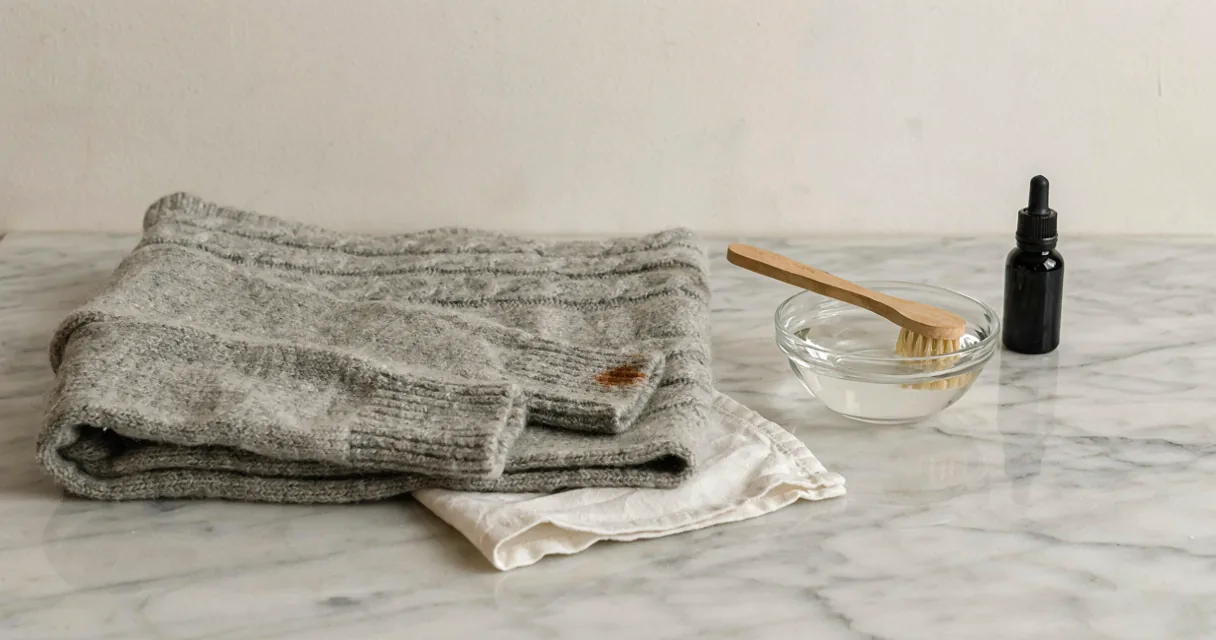
Pre-treating a stain before washing is worth doing for wool: removing as much of the substance as possible before the full wash makes it less likely that the stain sets permanently during the wash cycle. The approach you use depends on what caused the stain, and getting a few key habits right will protect the fibre rather than damage it.
Check the care label before you do anything
The care label on your garment is the starting point, not an afterthought. Some wool garments are marked dry clean only, and if yours is, you should take it to a dry cleaner rather than treating it at home. If you have already attempted a treatment, let the cleaner know what you used, since certain solvents can complicate professional cleaning. The GINETEX care symbol system defines what each label symbol means, including symbols for hand wash only, very mild machine wash, and no wet treatment at all. Understanding these before you reach for a cloth means you are working with the garment’s intended care rather than against it. Our guide to reading drying symbols on a care label covers the label system in more detail if any of the symbols are unfamiliar.
Always blot, never rub
Rubbing a stain into wool pushes it deeper into the fibre and risks felting or distorting the fabric. Instead, blot excess liquid quickly using white tissue or an absorbent cloth, and lift any solid matter with a blunt knife or spoon rather than scraping across the surface. When applying any liquid treatment, work from the edge of the stain towards the centre to avoid spreading it further. Apply small amounts at a time, blotting between each application. According to The Woolmark Company , this edge-to-centre approach is especially important because wool fibres can hold a stain ring if liquid is allowed to spread outward and dry.
Before treating any area that will be visible, test your chosen solution on a hidden part of the garment, such as an inside seam, to check for colour change or dye bleed. This is a practical precaution regardless of how gentle the product claims to be.
Match the treatment to the stain type
Not every stain responds to the same treatment, and methods designed for cotton or synthetic fabrics are not always suitable for wool. The Woolmark Company sets out specific guidance for common stain types:
- Grease or butter: Scrape off the excess, then use a hot iron over tissue to draw out the oil before applying a grease remover or white spirit on a lint-free cloth.
- Red wine, fruit juice: Rinse with cold water first, then dab with a dilute solution of wool-approved detergent in tepid water. If the stain persists, a mixture of three parts surgical spirit to one part cold water, dabbed on and blotted, may help.
- Black coffee: Rinse immediately under cold running water if possible. If it has dried, a solution of baking soda in tepid water, lightly dabbed and blotted, can loosen it before a wool detergent wash.
- Blood: Blot away excess with an absorbent towel, then dab with undiluted white vinegar followed by cold water. Avoid warm water, which can set protein-based stains.
- Lipstick or make-up: Dab from the edge with white spirit or a spot-cleaning spray on a lint-free cloth, pressing gently with an absorbent cloth to lift the solvent.
- Ink (ballpoint): Use surgical spirit on a lint-free cloth, pressing gently. Do not allow to dry between applications.
For oily stains, solvent-based treatments should be applied first and allowed to evaporate fully before any water-based treatment follows. Mixing the two without allowing the solvent to clear can leave a coloured ring in the fabric.
Why wool needs a different approach from cotton
Wool is a protein fibre, which makes it more sensitive to heat, alkaline detergents, and mechanical agitation than cotton or synthetic fabrics. This is why stain removal advice aimed at cotton does not transfer reliably. As The Woolmark Company notes , wool generally requires a mild, neutral detergent and gentle treatment throughout. Hot water can cause shrinkage or felting at the stain treatment stage, just as it can during washing, so tepid or cold water is appropriate for most of the treatments described above.
Wool’s natural structure also means it can trap solvent residue if rinsing is incomplete. If a water-based treatment has been used and the garment’s care label allows washing, rinsing the treated area thoroughly and then washing the whole garment rather than just the spot helps prevent residue rings from forming.
After treatment: preparing for the wash
Once the stain has been treated and the area rinsed, the garment is ready for washing according to its care label. Our guide on how to wash a wool garment correctly before you dry it covers the washing stage in detail. If the care label permits machine washing, the wool or delicates cycle with a mild detergent is appropriate. After washing, flat drying is the recommended approach for most wool garments to avoid stretching. For guidance on that stage, see how to dry wool garments on an autumn drying day .