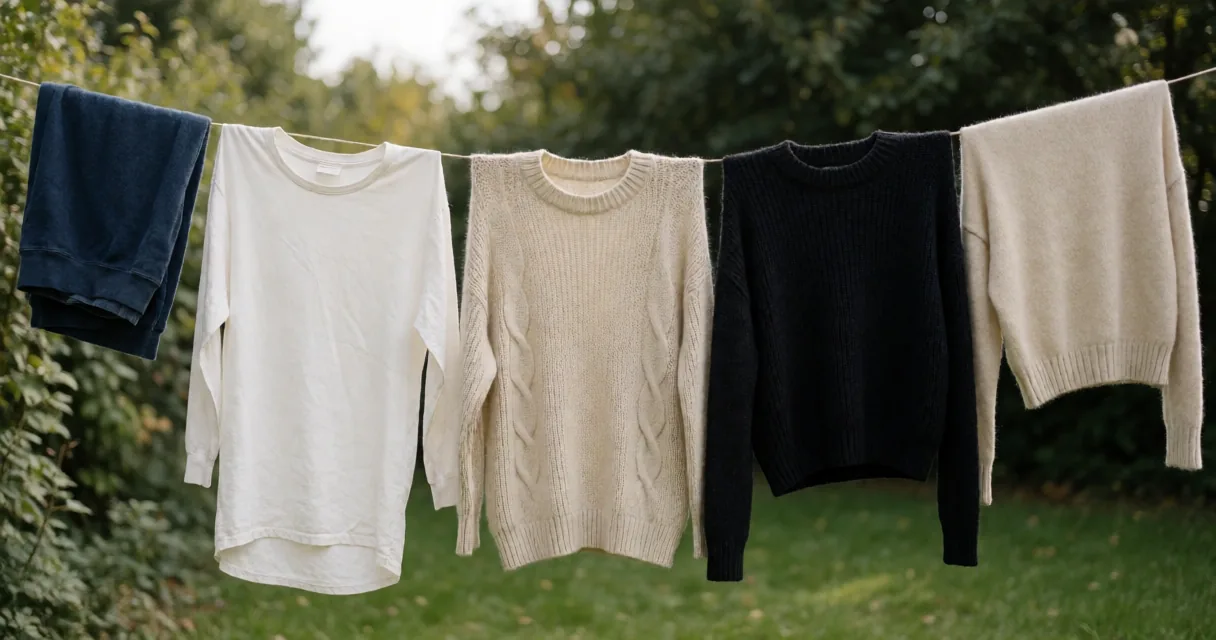
Choose the load size for the wash programme and the garments, rather than using one drum-filling rule for every basket. If autumn laundry brings machine-washable knitwear back into your routine, its care instructions may call for a substantially smaller load than your everyday wash. Start with the labels, then find the matching programme and its load limit in your machine’s instructions.
Match the load to the care instruction
GINETEX’s care-symbol guidance distinguishes normal, mild and very mild washing processes. One bar below the wash tub indicates reduced mechanical action; two bars indicate a very mild process. The temperature number is a maximum, not a target that overrides the other parts of the symbol.
For its 40°C very mild wash guidance, which includes machine-washable wool, GINETEX specifies a drum no more than one-third full. That is a recommendation for that particular process, not a universal rule for every wool garment or every washing programme. The garment must allow machine washing in the first place, and the machine’s programme instructions still matter.
GINETEX gives a different limit for the 60°C easy-care coloured wash: no more than two-thirds full. These examples show why the space available in the drum is not the only thing to consider. A basket that fits physically may contain garments with different care requirements.
Decide what belongs in the same wash
A practical way to load an autumn basket is to set aside anything with a different required care process before deciding how much to put in. For example, do not treat a washable wool jumper as an ordinary cotton item just because both fit in the drum. Use the mixed-load sorting guide to organise that first decision.
Then check the selected programme’s instructions for its permitted load. If you cannot establish that all the items can use the same process, keep them separate until you have checked their labels. This is a planning suggestion, rather than a claim that all autumn clothing needs a special cycle.
For a basket containing towels, cotton layers and knitwear, try making separate groups on the floor or a clear surface before loading. That makes it easier to notice an item that needs different treatment. Avoid adding an extra garment solely to fill a visible gap when it does not belong in the selected programme.
Keep spin choice separate from drum space
The Bosch washing-machine guide explains that a higher spin speed generally leaves clothes drier after washing. That does not mean the highest setting is appropriate for every garment. GINETEX advises avoiding spinning or using only a short spin for some mild fine-wash processes to reduce creasing.
Choose an allowed programme and spin setting before thinking about how quickly you want the laundry ready. Do not use a smaller load as a reason to override garment-care instructions. The spin-cycle guide explains that separate decision in more detail.
Plan the drying space before starting
Once the wash groups are decided, consider where each group will dry according to its labels. You could wash the group you can accommodate first and leave the others for a later load, rather than starting several loads without a drying plan.
AirDry’s planner can help with planning outdoor drying, while the garment’s care instructions determine whether that method is suitable. Autumn provides a reason to reconsider the mix in your basket; it does not establish today’s weather or create a different loading limit. For each load, the useful sequence is the same: care labels, compatible programme, programme load limit, then a suitable drying plan.