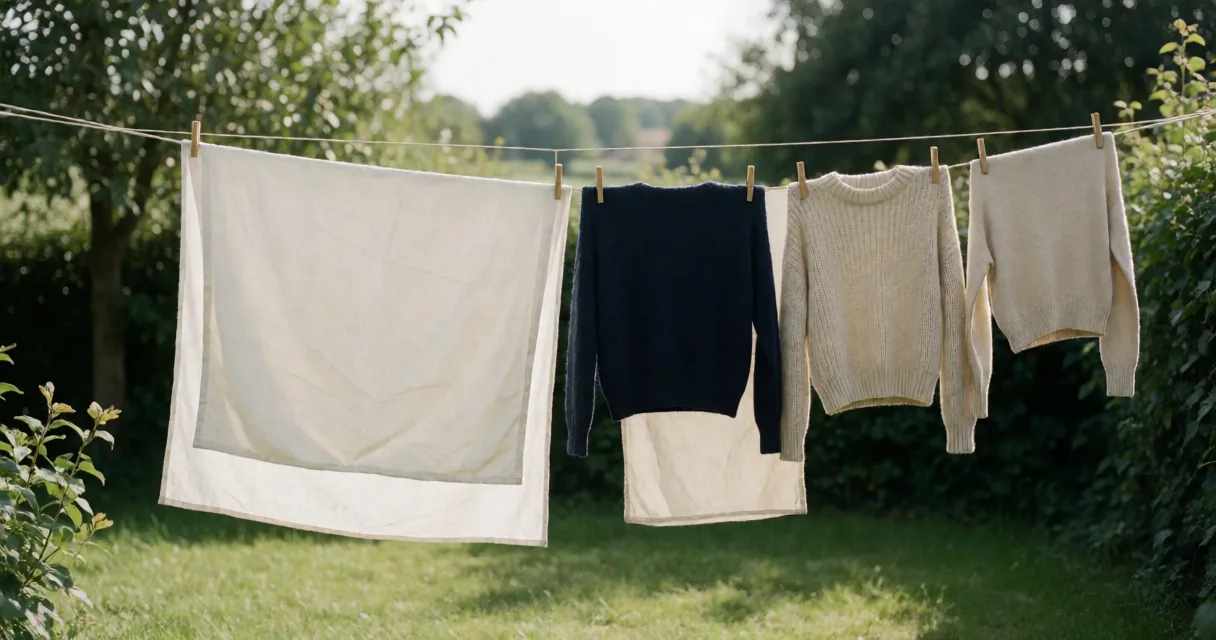
Forecasts for the next few hours are generally more reliable than those for tomorrow afternoon, and understanding why helps you make a smarter call about when to hang a load outside.
How a weather forecast is actually built
A modern forecast is not a single calculation. As the Met Office explains , meteorologists gather millions of daily observations from satellites, ground instruments, radar, marine sensors, and upper-atmosphere devices, feed that data into supercomputer models, and then expert forecasters refine the output by accounting for local factors. The model is run multiple times, producing a spread of possible outcomes rather than one definitive answer. Where those runs cluster tightly together, confidence is high. Where they diverge, the uncertainty is worth taking seriously before you peg out a full duvet.
What to take from a short-range forecast
For a laundry decision, the most useful window is roughly the next few hours. Within that window, starting conditions are well-observed and model runs tend to agree more closely, so a dry forecast is a reasonable basis for action. As the forecast period extends further ahead, the spread between possible outcomes can widen, and a headline rain or cloud symbol may carry more genuine uncertainty than it first appears.
Practically, this means:
- A forecast for heavy showers at noon, issued at 9 am the same day, is a more reliable basis for timing than one issued the previous evening.
- A forecast that has changed significantly since you last checked signals a less settled atmosphere.
- If the forecast is consistent across several recent updates, that consistency itself gives you more to work with.
Humidity and what the air can actually absorb
Even a dry, cloud-free day may dry washing slowly if the air is already carrying a lot of water vapour. As the Met Office notes , relative humidity indicates how close the air is to being saturated with water vapour at a given temperature. When relative humidity is high, sweat does not evaporate easily from the body; the same principle applies to wet fabric. Warmer air can hold more water vapour than cooler air, so a mild but damp morning may allow better drying once temperature rises and the air’s capacity increases, provided actual water-vapour content does not also rise.
When a forecast shows high humidity persisting through the day, treat outdoor drying as marginal even if no rain is expected. If humidity is forecast to fall through the morning, hanging out later in the day may be more effective than an early start. See what makes a good drying window for a fuller breakdown of how these conditions interact.
Wind as a helpful but uncertain factor
Wind moves air across wet fabric, which can support drying conditions. As the Met Office explains , wind is air in motion driven by differences in atmospheric pressure, and those pressure differences shift constantly. A forecast for a light breeze can become calm or gusty in practice, particularly in sheltered gardens or urban streets where local features redirect airflow. Treat wind as a helpful factor when forecast, while recognising that local conditions can make the reality quite different from the broader prediction.
For more on making the most of airflow when sunshine is limited, see how to use wind when sunshine fades .
Applying forecast confidence to your decision
A practical framework for the decision:
- Check how recently the forecast was updated. A forecast revised in the last hour or two reflects the latest observations and is more reliable for a same-day decision.
- Favour the short window. If conditions look favourable for the next few hours, that is a reasonable basis for hanging lighter items outside.
- Look for consistency, not just the headline symbol. If rain probability appears low but cloud cover is forecast to increase steadily, factor that trajectory in.
- Consider humidity alongside precipitation. A dry forecast with high humidity may still mean slow or incomplete drying, particularly for thicker items.
- Have a fallback. On days with genuine uncertainty, hanging items that dry quickly reduces the cost of a wrong call. For days that do not come together, indoor drying remains a practical alternative.
Forecast uncertainty is not a reason to avoid outdoor drying; it is a reason to match your commitment to the confidence level on offer.