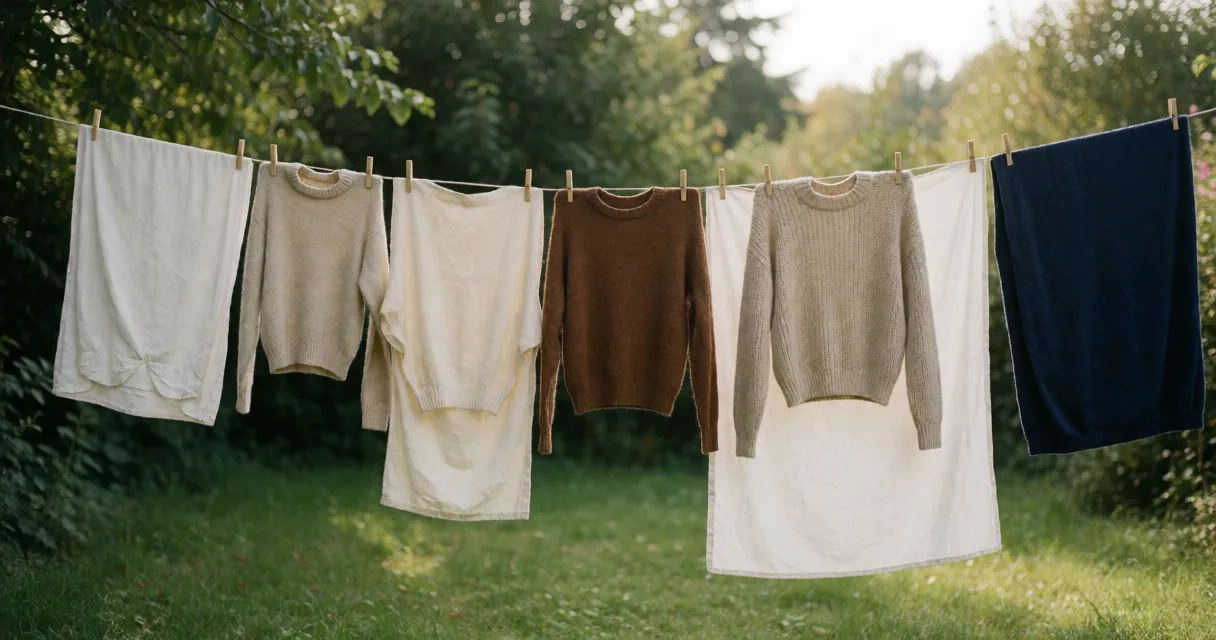
Bring washing in before dusk in autumn if it is not fully dry. Once temperatures start falling after sunset, relative humidity rises and damp fabric can pick up moisture from the air rather than losing it. Understanding why this happens helps you decide when the risk is real and when a brief evening outside is still worthwhile.
Why falling temperatures raise relative humidity
Warmer air can hold more water vapour than cooler air. As the Met Office explains , relative humidity measures how close air is to being fully saturated with water vapour at a given temperature. When temperature drops, the air’s capacity to hold vapour falls, so even if the actual amount of water vapour in the air stays the same, relative humidity climbs. In autumn evenings in the UK, this process can push relative humidity high enough that the air reaches dew point, the temperature at which vapour begins to condense into liquid water. Fabric left outside at this point can become noticeably damper than when you left it, undoing progress made during the day.
This does not mean every autumn night brings heavy dew, or that every garden cools at the same rate. Clear, still nights tend to produce more pronounced temperature drops than cloudy or breezy ones. But because the direction of the risk is consistent, evening is a practical point to act.
Darkness is a signal, not just a time preference
The practical reason to use fading light as your cue is straightforward: sunshine drives evaporation, and once the sun is low or gone, one of the main drying forces disappears. Without solar energy, you are relying on air movement and residual warmth alone. At the same time, temperature is beginning its overnight descent. The combination means drying effectively stops and re-wetting becomes possible. If your washing is dry before dark, bringing it in at that point also protects it from anything that happens overnight, including unexpected rain. For guidance on how to read the afternoon window before conditions shift, see When should you bring washing in before the forecast changes?
How overnight forecast uncertainty affects the decision
Night-time forecasts carry inherent uncertainty. As the Met Office describes , forecasts are produced by feeding vast datasets into models and refining the output with expert analysis, but small differences in starting conditions can compound over time. A forecast that shows dry conditions at one point in the evening may not reliably reflect what happens several hours later. For a low-stakes decision like leaving a rack of towels outside, this uncertainty is worth factoring in, especially when the consequence of being wrong is wet washing that needs a full second dry. If you want to build better habits around reading forecasts before you hang out, How to read forecast uncertainty before hanging washing outside covers the key signals.
What to do with washing that is still damp at dusk
If your washing has not dried fully by the time the light fades, bring it inside rather than leaving it to the night. Damp washing brought indoors does add moisture to the air, which can contribute to condensation on cool surfaces if ventilation is poor. The Energy Saving Trust notes that a typical household produces significant moisture through everyday activities, and that improving ventilation is the primary way to manage this, for instance by opening a window or using extractor fans while damp items finish drying indoors. Spreading items on a rack near a slightly open window, or in a room with good airflow, reduces the risk of moisture building up. The article Indoor laundry drying slowly? An autumn room check offers a practical checklist for managing this transition indoors.
Practical habits for autumn evening drying
A few consistent habits reduce the guesswork:
- Check the forecast before you hang out, not just at dusk. If overnight temperatures are predicted to drop sharply and skies are expected to clear, dew risk is higher.
- Prioritise thicker items early in the day. Items that hold more water need the longest drying window. Hanging them out first gives them the best chance of being dry before you need to make an evening decision.
- Use the last of the afternoon sun actively. Repositioning a rack into a sunny or breezy spot in mid-afternoon can make the difference between dry and nearly dry by dusk.
- Do not assume one more hour will finish the job. On a cooling autumn evening, an extra hour outside may add moisture rather than remove it.
If you have not already, Autumn outdoor drying: how to use wind when sunshine fades covers how to get more from the daylight hours you have.